
Rediscovering Mildred Bailey: The Legacy of “The Rockin’ Chair Lady”
Mildred Bailey, often referred to as “The Rockin’ Chair Lady,” holds a unique place in the tapestry of American music. Her journey as the first woman to sing with a jazz big band began with the iconic Paul Whiteman Orchestra from 1929 to 1933. Her powerful voice and unique phrasing not only enchanted audiences but also played a pivotal role in shaping American pop music alongside legends like Louis Armstrong.
Bailey’s contributions went far beyond her own performances; she significantly influenced Bing Crosby’s jazz-inspired vocal style. Despite her dynamic career and numerous recordings with some of the greatest improvisers of her time, Bailey’s legacy has faded, overshadowed by her contemporaries. She passed away in 1951, just 44 years old, yet her impact resonates through the generations.
Native American Jazz Heritage
In exploring the jazz scene, it’s vital to recognize the contributions of Native American musicians. Artists such as “Big Chief” Russell Moore, a prominent Pima trombonist, grooved alongside Louis Armstrong, while many Black jazz greats like Max Roach, Charlie Parker, and Dizzy Gillespie embraced their Native American heritage, weaving it into the rich fabric of jazz music.
These cultural intersections highlight a shared experience; however, they seldom manifested visibly on stage. One notable exception was John Clayton’s “Red Man-Black Man,” a suite commissioned by the Monterey Jazz Festival that intricately explored the resonances between African American and Native American musical traditions.
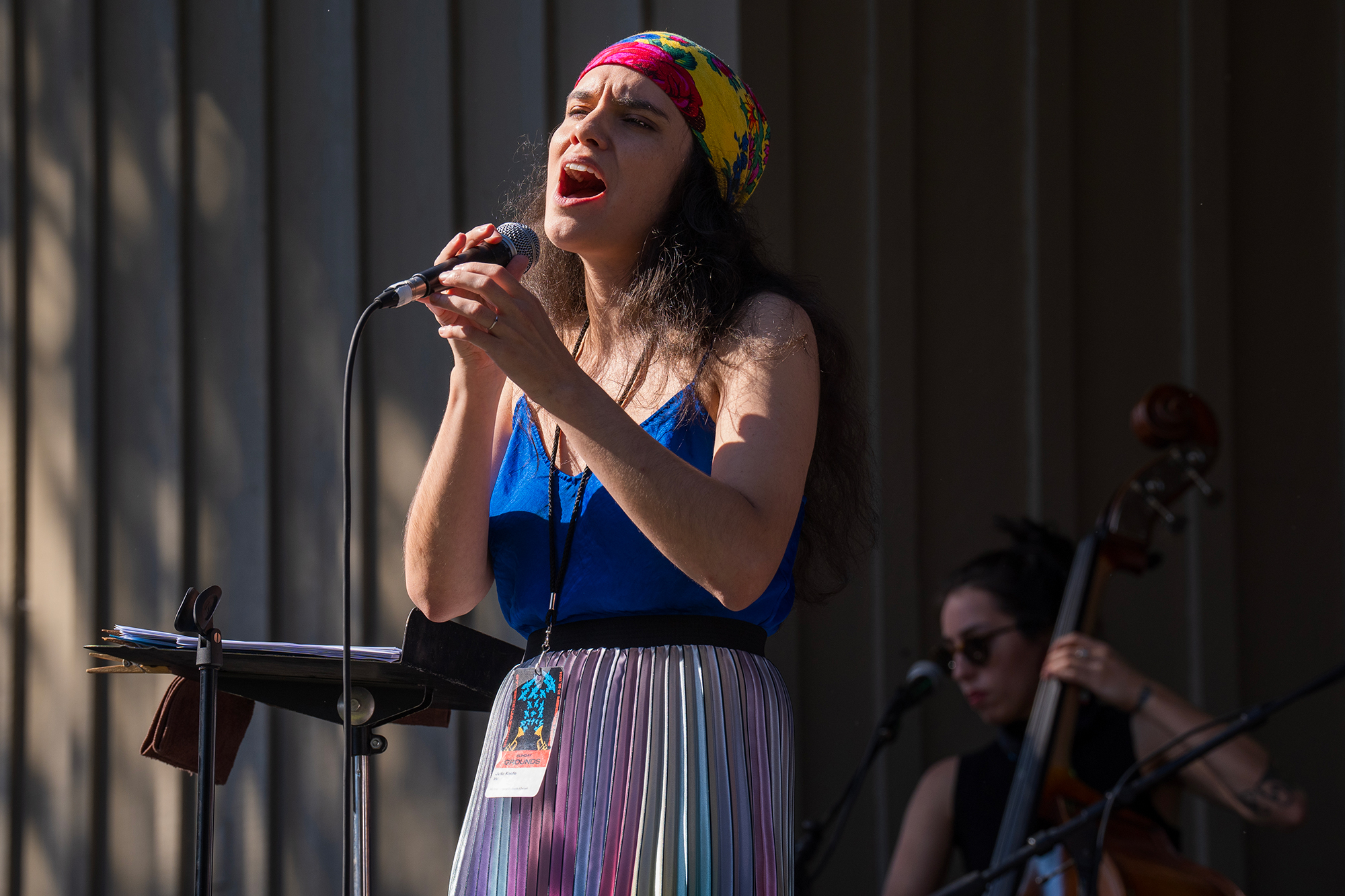
Julia Keefe performs at the 2024 Monterey Jazz Festival. (Jessica Worthington)
The Mildred Bailey Project: A Step Forward
The journey to revive Bailey’s legacy and connect contemporary Native American jazz artists began in earnest when Julia Keefe initiated the Mildred Bailey Project around 2009. This creative endeavor placed Keefe on the jazz map and helped her forge connections with other Indigenous musicians. For years, conversations swirled about creating an Indigenous jazz orchestra, yet financing such a venture seemed daunting. However, in 2021, after landing a major grant from South Arts, the dream began to materialize.
Partnering with Diné trumpeter Delbert Anderson, the 16-piece ensemble debuted at Olympia’s Washington Center for the Performing Arts in 2022, quickly following up with a standout performance at the Monterey Jazz Festival. Initially, their repertoire centered on expanded arrangements of Bailey’s music, alongside modern interpretations of songs like Jim Pepper’s “Witchi Tai To,” an unexpected hit from the jazz-rock band Everything Is Everything in 1969.
A Tapestry of Cultures: Expanding Musical Horizons
As the musicians in the band interacted more, particularly during a residency at the Kennedy Center for the Mary Lou Williams Jazz Festival in spring 2024, they began to shape their original Indigenous jazz material.
“What’s evolved is folks being able to bring in their own music, music from their tribes and different parts of the Western hemisphere,” Keefe noted. This collaborative spirit allowed for a beautiful showcase of pan-Indigeneity, emphasizing the diverse cultural backgrounds of the ensemble’s members.
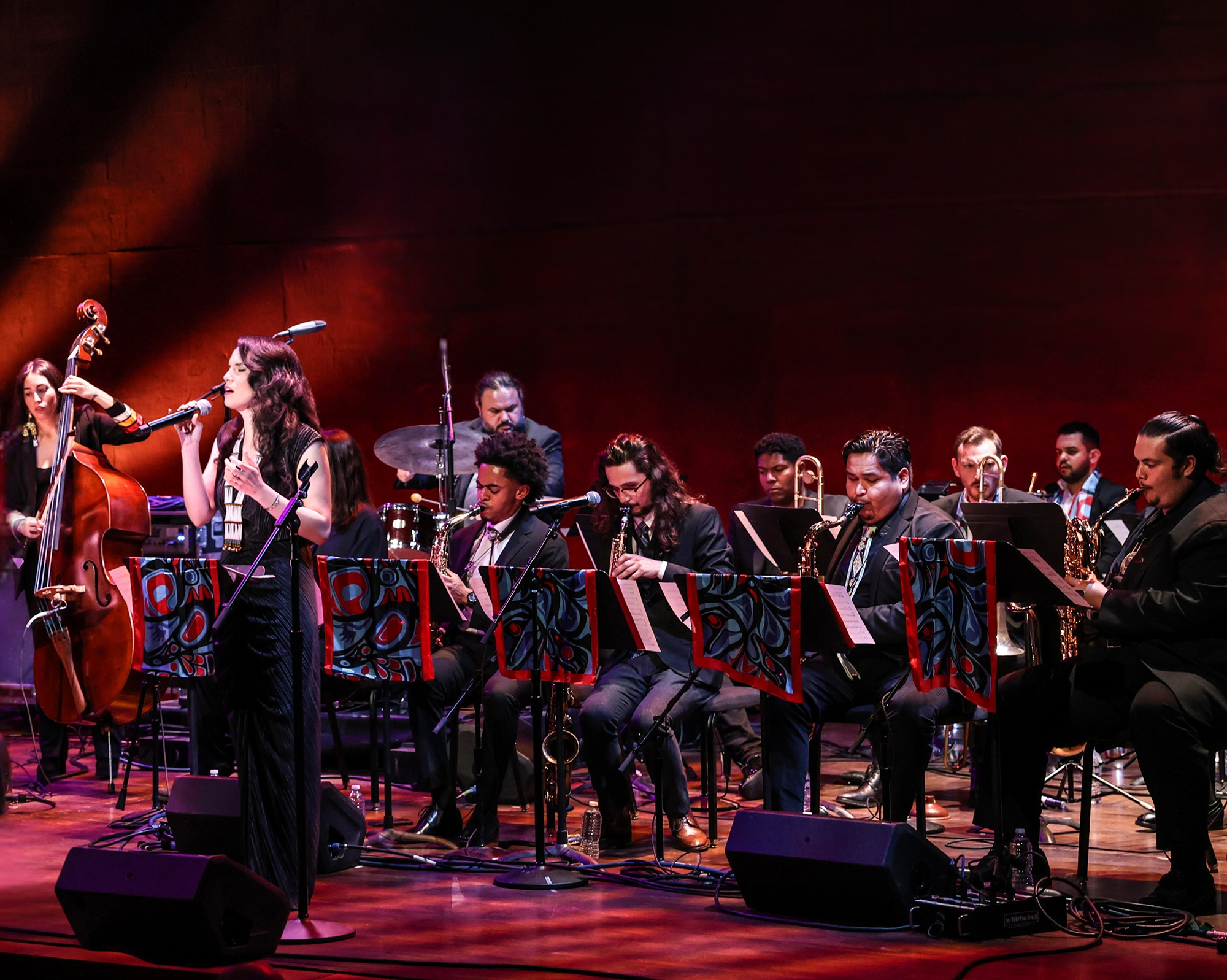
The Julia Keefe Indigenous Big Band performs at the Kennedy Center in Washington D.C. (Jati Lindsay)
Uniting Through Music: The Ensemble’s Upcoming Album
The Indigenous ensemble comprises musicians from Canada, the U.S., Mexico, Cuba, and Hawaii, creating a rich blend of cultural influences. Many members contribute unique pieces to the upcoming debut album, Incarnadine, which promises to feature an innovative collection of compositions. Keefe enlisted one of the band’s trombonists, Arkansas-raised Quinn Carson, to produce the project.
Carson, an Apache and Kiowa horn player, had already embarked on his own orchestral journey in Los Angeles, melding Apache melodies with various styles. His connection with Keefe transformed his musical experience, bringing forth a collaborative energy that sparked creativity.
“I was in this dark room doing research into Native American songs, what it would sound like before contact,” Carson reflected. “Julia turned this light on, and now there are 15 people in the room with me, and we’re all working together.”
Through these collaborations, the ensemble is not only redefining jazz music but also uncovering and celebrating the rich cultural heritage that often goes unnoticed in mainstream narratives.